From idea to stream: how technology makes live events accessible
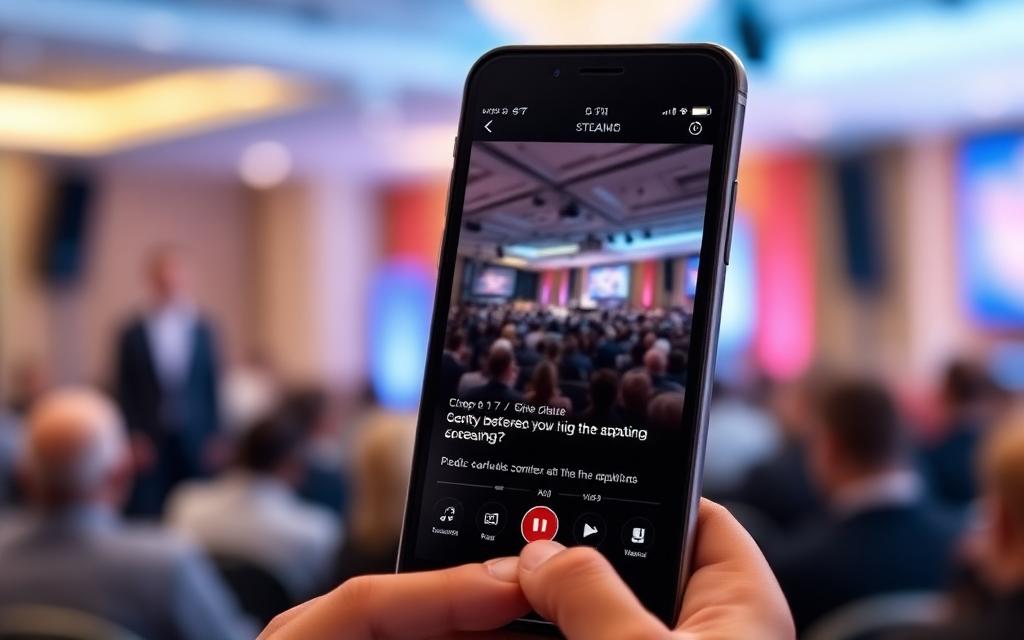
Accessibility at live events was long a logistical mammoth project. Induction loops had to be laid, FM receivers distributed, and interpreters coordinated on-site. Today, things look different, and the change comes from a surprisingly simple direction: the smartphone.
The principle is compellingly simple. The audio signal from the event is captured directly from the mixing desk and streamed in real-time over the internet. Guests open a web app on their smartphone, no download, no installation, and receive crystal-clear sound directly. Those wearing a Bluetooth hearing aid or cochlear implant pair it with their smartphone and have the sound directly in their ear, without background noise, without reverb, without losses.
At the same time, AI-powered speech recognition works in the background. It converts spoken words into text in real-time, as a live transcript on guests' screens. The latency is in the range of seconds. For people with hearing impairments, this is a game changer, but also for anyone who wants to read along in a loud environment.
The next step: translation. Modern AI models translate the transcribed text into over 30 languages, also in real-time, both as text and as spoken translation. A keynote in German becomes simultaneously available in French, English, or Japanese, without a team of simultaneous interpreters needing to be on-site.
The best part: the entire solution is plug and play. No hardware setup, no special infrastructure, no days of preparation. Integration into the existing setup takes minutes. And the event branding can be seamlessly incorporated, so the accessibility solution does not feel like a foreign element but as part of the overall experience.
Technology has transformed accessibility from a complex special project into a standard available feature. The barrier is no longer the technology, but only the decision to use it.